
In recent years, shipping and logistics companies have faced sustained pressure from geopolitical uncertainty, rising costs, tighter regulations and increasingly demanding customers. In 2026, these challenges are intensifying alongside strong market growth, with the global logistics sector projected to cross USD 863 Billion by 20341 – adding further complexity to an already demanding operating environment.
Forward-looking companies are accelerating technology adoption to stay ahead of these challenges. Artificial Intelligence (AI), digital twins and automation are moving from pilots to enterprise-scale deployment, streamlining fragmented workflows and reducing reliance on manual checks. Reports show that top-performing organizations are implementing AI at more than twice the rate of their peers to optimize processes.2 Meanwhile, the top emerging uses case are concentrated in demand forecasting, order management and fulfillment, supply planning, logistics and distribution, and sales and operations planning.
Yet, a critical gap persists, as surfaced in a recent PwC survey.3 Despite growing tech investments, 89 percent of operational leaders said expected results had yet to be realized. Owing largely to data and integration challenges, only 27 percent had embedded an AI strategy across business units. Furthermore, despite the promise of Agentic AI, just 37 percent were comfortable delegating autonomy for end-to-end processes.
For shipping and logistics leadership, the takeaway is clear: Success depends not only on selecting the right technologies, but also on embedding them effectively at scale. The trends that follow highlight the technologies fundamentally re-shaping this industry – and how leaders can harness them to drive intelligent operations and create meaningful impact in 2026 and beyond.

1. Agentic Logistics: Shifting from Insight to Autonomous Execution

Gartner4 identifies Agentic AI as a top supply chain trend, enabling systems to autonomously optimize inventory, routing and execution decisions. This marks a shift from using AI systems for automation and visibility to enabling autonomous execution. For instance, Agentic AI can automate end-to-end logistics workflows – from converting unstructured booking requests into instant, touchless transactions to selecting optimal shipping lanes and creating electronic bookings in real-time. It can validate Bills of Lading (BoL) by cross-checking ports, incoterms, rates, surcharges and regulatory requirements, and can detect and correct errors in real time without manual intervention.
By unifying shipping operations into a single intelligent orchestration layer, the right AI-powered solution can automatically prioritize tasks based on urgency and ETA, while rapidly surfacing performance requirements and predictive alerts – enabling teams to act before service or revenue is at risk. The impact is tangible. A leading logistics provider achieved a 30 percent increase in agent productivity, 99.7 percent data accuracy and ~USD 1.3 Million in cost-savings. Meanwhile, another provider reduced turnaround time by 80 percent, achieved over 99 percent accuracy and cut costs by 50 percent.
Maximizing Business Impact
Leverage hyperautomation and embed AI into core workflows: Focus on high-friction processes such as document processing, exception handling and booking to optimize value.

2. Predictive Supply Chains: Putting Digital Twins at the Core
Logistics providers across industries face ongoing challenges in operational efficiency, demand variability, inventory positioning and fulfillment. The result is constrained growth and missed revenue opportunities as delivery expectations rise sharply.
Digital twins are emerging as a key enabler in addressing this complexity, with adoption projected to grow at an extraordinary compound annual growth rate of 25.7 percent over 2025-35.5 These virtual replicas of assets and processes simulate and optimize operations across logistics networks. When combined with predictive AI, they evolve from descriptive tools into prescriptive systems, supporting scenario planning and automated decision-making. This enables businesses to transition from static, rule-based operations to dynamic optimization with end-to-end visibility into performance gaps.
Organizations applying these capabilities report up to a 20 percent improvement in delivery performance, 10 percent reduction in labor costs and 5 percent revenue uplift.6
Maximizing Business Impact
Link insights directly to execution: Use digital twins not just to inform decisions but trigger operational interventions – re-routing shipments, adjusting capacity or reallocating inventory.

3. Autonomous Logistics: Scaling Hybrid Operating Models
Gartner predicts that by 2028, ~15 percent of everyday supply chain decisions will be made autonomously.7 Autonomous vehicles and robotics are also gaining traction, particularly in last-mile delivery and terminal operations, improving speed, reliability and cost efficiency. This momentum is reinforced by the fact that 38 percent of companies plan to use intelligent automation for logistics, distribution and or production.8
In reality, hybrid operating models are the need of the times, with advanced AI carrying out routine tasks to augment human judgement and decisioning. Full autonomy remains constrained by technical, ethical and regulatory challenges, reinforcing Human-in-the-Loop (HITL) models for exception handling, compliance and risk management. By deploying hybrid models in which AI handles mundane, high-volume tasks while humans focus on complex and customer-centric scenarios, businesses are building more resilient and scalable logistics operations.
Maximizing Business Impact
Leverage proven HITL operating models: Clearly define which decisions are automated and where human oversight is required. This balance ensures scalability without compromising risk control or service quality.

4. Intelligent Warehousing: Orchestrating People, Systems, and Robots

The rapid growth of AI in warehousing, projected to exceed USD 66.4 Billion by 2032,9 reflects the scale of the shift toward intelligent, integrated operations. While warehouse automation is accelerating, isolated automation is creating fragmented gains. The real differentiator lies in end-to-end orchestration across systems, machines, and people.
Currently, AI is being embedded across core warehouse functions, from automated picking and sorting to predictive inventory management and rapid decision-making. As order volumes rise and labor constraints persist, shipping and logistics firms must move beyond siloed automation toward orchestrated environments where systems dynamically allocate tasks, optimize flows and continuously adapt. Crucially, its impact is amplified when integrated with robotics, Internet of Things (IoT) and cloud platforms, enabling synchronized workflows across humans and machines operating in parallel.
Maximizing Business Impact
Shift from task automation to flow optimization: Integrate Warehouse Management Systems, robotics, and labor systems into a unified orchestration layer to drive resilient, scalable operations, improving throughput, reducing errors and compressing cycle times.

5. Net-Zero Logistics: Turning Obligation into Competitive Advantage

The transport and logistics sector accounts for nearly 25 percent10 of global carbon emissions. With environmental scrutiny intensifying and customers increasingly prioritizing transparency, compliance is shifting from regulatory obligation to a strategic lever of competitive advantage. This puts the pressure on logistics providers to embed sustainability directly into operations rather than treating it as a reporting or compliance function.
McKinsey analysis indicates that available technologies can drive a 40-50 percent reduction in logistics emissions by 2030.11 Industry players will benefit from investing in greener transportation modes, optimized routing and emissions reduction strategies to prepare for stricter environmental expectations. Digital traceability and always-on monitoring enable greater visibility into emissions, fuel usage and compliance performance across global freight networks. These capabilities are key to automating data collection, improving reporting accuracy and responding more effectively to evolving regulatory frameworks and customer expectations.
Maximizing Business Impact
Digitize compliance workflows and embed sustainability metrics into operational decision-making: Integrate data-driven sustainability models with compliance reporting to enhance efficiency, reduce risks, strengthen customer and regulatory trust, and drive brand differentiation.

6. Workforce Transformation: Building the Human-AI Enterprise
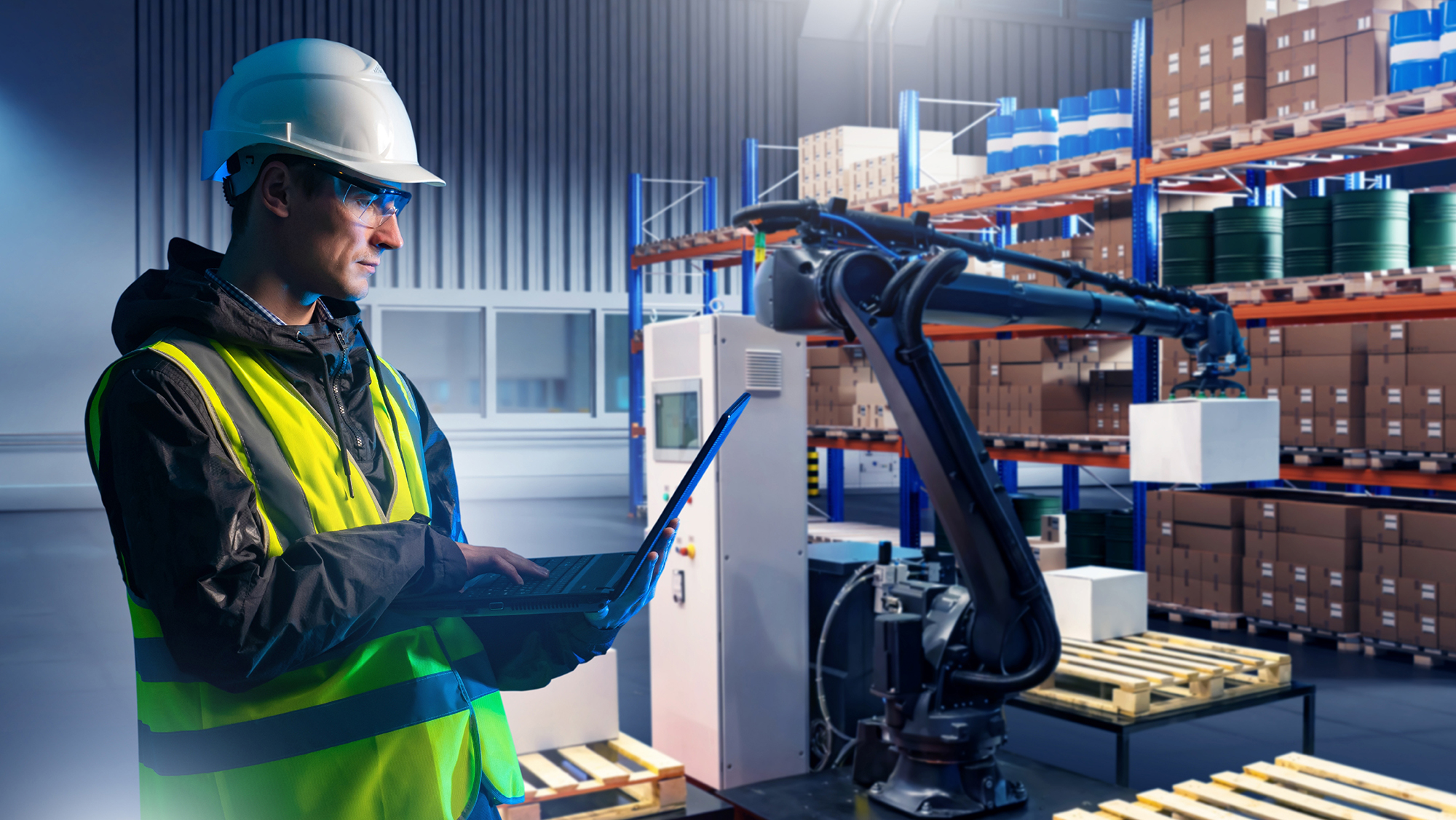
As operational environments become more digital and data-intensive, workforce requirements are shifting toward data literacy, systems thinking and AI fluency. Organizations that re-skill and re-design roles around human-AI collaboration will be better positioned to enhance productivity, reduce errors and build more adaptive and resilient logistics operations capable of scaling in increasingly volatile environments.
This approach combines human expertise with digital execution, where automation manages repetitive, rules-based tasks while people focus on exception handling, oversight and strategic problem-solving. This enables logistics organizations to improve operational efficiency while better managing increasing complexity across global freight networks.
Integrating human capabilities with the digital core of technology and advanced analytics also helps strengthen customer trust. In our experience, this approach delivers measurable business impact, including 40-50 percent reduction in cost-to-serve and 20-25 percent improvement in customer advocacy.
Maximizing Business Impact
Invest in learning, development and role re-design alongside technology: Target workforce elevation, moving employees from execution to higher-value tasks, including supervision, exception management and customer engagement.
Charting the Path Ahead
Taken together, these trends are poised to transform shipping and logistics from a reactive function into a central control layer for supply chain performance, enabling organizations to anticipate disruptions, dynamically adjust flows and continuously optimize service and profitability. The shift fundamentally enhances responsiveness and resilience under increasing operational pressure.
Against this backdrop, the defining question is no longer about technology adoption, but about execution at scale: Can organizations translate intelligence into real-time decisions across the value chain?
With nearly 60 percent12 of digital supply chain initiatives projected to underdeliver value by 2028, competitive advantage will belong to organizations that combine deep domain expertise with scalable technology to close the execution gap.
Talk to our experts to explore how your organization can harness the emerging trends to drive sustained competitive advantage.
About the Author
Steven Helm
Corporate Senior Vice President,
Shipping and Logistics

Steven is a seasoned transportation and supply chain leader with 25 years of industry experience. At WNS, he partners with global clients to drive operational transformation, enhance customer experience and unlock value through digital innovation, while helping shape Malkom, WNS’ Agentic AI platform for shipment lifecycle documentation.
References
-
Global Logistics Market Size, Share, Growth & Trends, 2034
-
Gartner Says Top Supply Chain Organizations are Using AI to Optimize Processes at More Than Twice the Rate of Low Performing Peers
-
PwC's 2026 Digital Trends in Operations: How AI Reinvents Enterprise Performance
-
Press Release: Gartner Identifies Top Supply Chain Technology Trends for 2025
-
Digital Twin In Logistics Market | Global Market Analysis Report - 2035
-
Using digital twins to unlock supply chain growth | McKinsey
-
AI and Emerging Technology | Gartner Supply Chain Symposium/Xpo™ 2026
-
Gartner Supply Chain Top 25: 2025 Best Global Supply Chain
-
Revolutionizing Logistics: AI in Warehousing Market Set to Soar Beyond USD 66.4 Billion by 2032 - Global Trade Magazine
-
Why is Reducing Carbon Emissions in Transportation and Logistics Important? | Ct Global Freight Audit
-
Reducing emissions in logistics | McKinsey
-
AI in the supply chain: From pilot programs to P&L impact - Supply Chain Management Review
FAQs
1. What are the top intelligent logistics trends shaping 2026?
Key intelligent logistics trends shaping 2026 include accelerating the adoption of Agentic AI for autonomous decision-making, expanding the use of digital twins to simulate and optimize supply chain operations, increasing AI-powered warehouse orchestration, strengthening predictive planning capabilities, scaling autonomous logistics networks, advancing sustainability initiatives through emissions visibility and optimization, and integrating human expertise with AI-driven operations to improve agility and resilience.
2. How is AI transforming logistics and supply chain operations?
AI is transforming logistics by enabling predictive planning, automating operational workflows, optimizing routing and network decisions, improving warehouse productivity, streamlining document-intensive processes and supporting real-time decision-making across the supply chain.
3. What is intelligent logistics according to WNS?
WNS defines intelligent logistics as the integration of AI, automation, analytics, orchestration platforms and domain expertise to create connected, resilient and scalable logistics operations that drive business outcomes.
4. How does WNS help logistics organizations accelerate intelligent transformation?
WNS combines deep logistics domain expertise, AI-enabled operations, advanced analytics, digital orchestration and Intelligent Operations frameworks to help organizations improve efficiency, strengthen resilience, enhance customer experience and accelerate business transformation.
5. Why are hybrid human-AI logistics models important?
Hybrid human-AI models combine the speed and scalability of AI-driven automation with human judgment and oversight. This approach helps organizations improve operational efficiency while maintaining control over strategic decisions, compliance requirements, customer interactions and exception management.