The airline industry is riding a wave of strong performance, but with turbulence ahead, setting a complex airline industry outlook for 2026.
As of October 2025, global passenger traffic grew 6.6 percent year-on-year, pushing load factors to a record 84.6 percent.1
International demand has surged, and profitability has returned: IATA forecasts a combined net profit of USD 41 Billion for 2026, with the net operating margin at 6.6 percent, a sharp recovery from pandemic lows.2
Yet, beneath the headlines, significant challenges remain.
Aircraft delivery delays, engine shortages and aging fleets continue to constrain capacity. Supply chain bottlenecks have added USD 11 Billion in extra costs,3 while labor shortages and wage inflation persist. Airports, though rebounding financially, face mounting congestion. At the same time, travelers are demanding more: Flexibility, personalization and seamless digital experiences have become baseline expectations, not premium perks.
To ensure that growing demand and rising expectations are met, the airline industry cannot rely solely on incremental fixes. Instead, they must re-think the fundamentals: How they retail, how they operate, how they engage customers and how they leverage technology.
Success in 2026 will be achieved by players who turn complexity into advantage — through smart retail ecosystems, AI adoption, loyalty re-invention and real-time adjustments to shifting carrier dynamics.
Here, we explore four trends in the airline industry set to define 2026 and beyond. With profitability stabilizing and passenger growth already forecast, airlines that blend resilience with relevance, efficiency with experience and operational discipline with digital ingenuity will be best positioned to take advantage of the opportunities 2026 has to offer.
1. Smart Retail Ecosystems
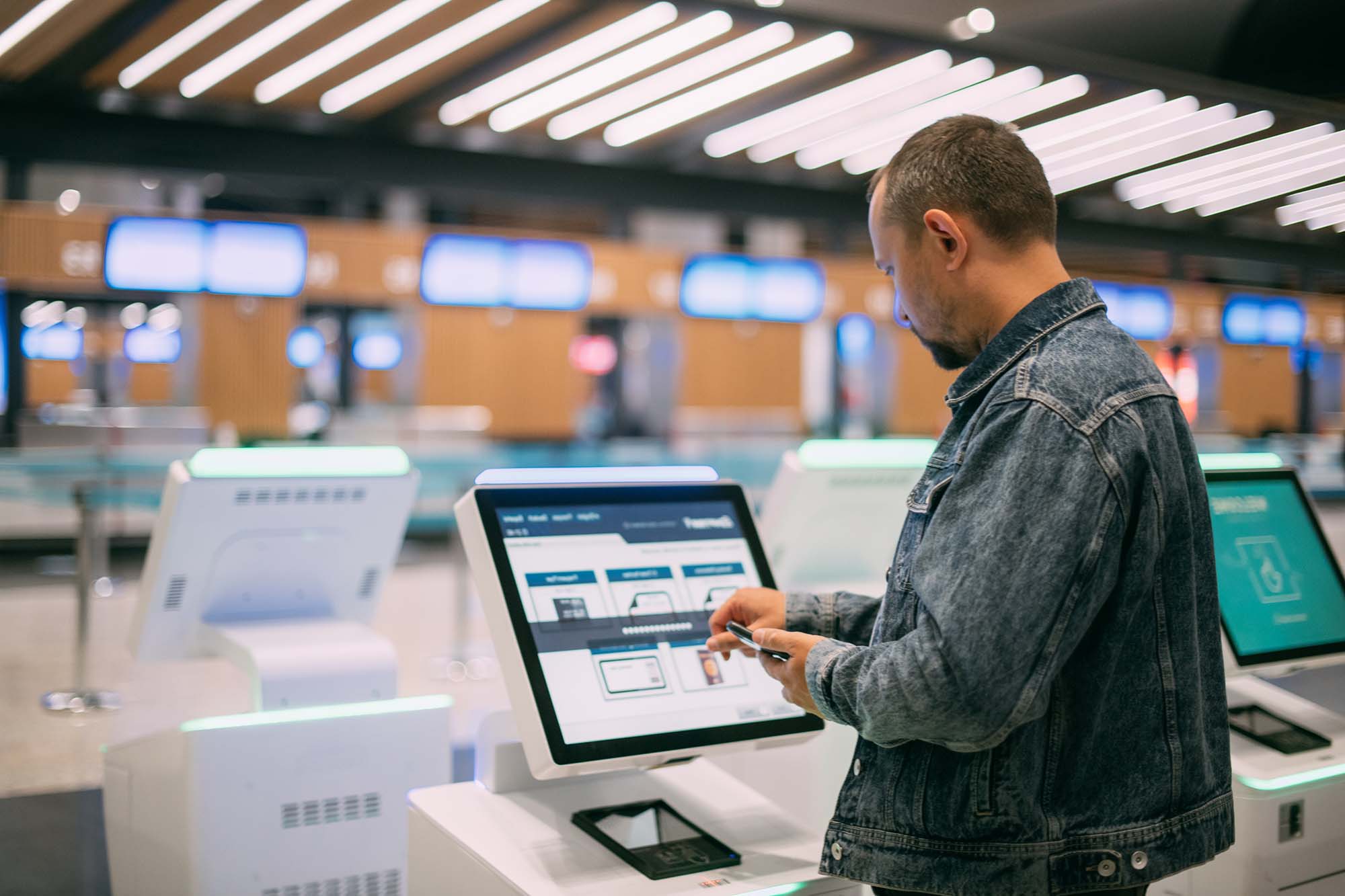
For airlines, the schedule was the only product for decades. However, in 2026, that paradigm is over. Modern travelers operate in an entirely different universe; one where digital commerce has re-conditioned expectations, retail giants have re-shaped consumer behavior and personalization is no longer a luxury but a baseline demand. In response, companies are undergoing a once-in-a-generation airline retailing transformation, re-defining not only what they sell, but how, to whom and with what value proposition.
All of which means that retail, not just routes, will drive growth in the year ahead and beyond. Leading airlines will be part retailer, part data-driven orchestrators and, increasingly, platform businesses capable of generating value far beyond the seat itself. This evolution begins with the New Distribution Capability (NDC), which offers a powerful solution for airlines, and by extension travel intermediaries, to regain control over their offerings and explore new revenue opportunities. True transformation, however, comes when NDC is integrated with tools like unified customer data platforms and AI-driven pricing engines.
These combined capabilities allow airlines to move beyond static fare families to dynamic, attribute-based bundles tailored to trip purpose, loyalty status and real-time inventory. Think priority boarding for business travelers, family zones for leisure flyers, carbon offset options for sustainability-conscious customers — all packaged intelligently and offered seamlessly.
Such offerings can enable the industry to deliver journeys that feel personal, effortless and rewarding.
According to research from McKinsey, personalized features like real-time travel assistance (70 percent) and pre-flight customization (65 percent) are important to travelers, while nearly half (46 percent) express positive attitudes toward travel bundles that combine flights with other services such as hotels, insurance, activities or airport transfers.4
With capacity tight and load factors near record highs, improving yield and ancillary attachment represents a reliable path to revenue growth. Smart retail ecosystems make this possible by harmonizing channels, so travelers experience consistent value wherever they shop. And retailing doesn’t stop at booking. Proactive service recovery during disruptions, with automated re-booking and compensation offers, becomes part of the retail promise, not an operational afterthought.
Ultimately, travelers are asking for flexibility, transparency and curated choice, without the friction of hunting through complex add‑ons. Airlines that embrace this shift — building integrated retail architectures powered by NDC, real-time data and AI — and approach retail as an end-to-end ecosystem can deliver on these needs and set the commercial standard for 2026.
The transformative potential of AI in the airline industry is being felt across operations and customer engagement.
According to BCG, industry investment in AI is forecast to increase 35 percent annually through 2030, reaching close to USD 10 Billion, as airlines rapidly leverage the technology to enhance efficiencies and re-imagine the customer experience.5

In 2026, the emergence of Agentic AI in aviation marks a shift toward more autonomous airline operations, building on efficiencies and process optimization to deliver proactive, anticipatory intelligence. In doing so, it is transforming customer service from reactive problem-solving into loyalty-building moments that deepen engagement.
Already, we’ve seen carriers pilot AI agents that offer trip planning, personalized bundles and mid-journey support. For instance, United Airlines is deploying Agentic AI to drive hyperpersonalized customer engagement. Airports such as Cincinnati / Northern Kentucky International Airport (CVG) are experimenting with agentic systems that autonomously manage elements of passenger movement and operational flow, from dynamic stand and vehicle routing to real-time wayfinding and congestion mitigation. Major hubs such as Frankfurt Airport are exploring advanced autonomy across ground operations, including the Intelligent Dispatching Agent (IDA) that dynamically coordinates turnaround activities, re-assigns resources in real-time and adapts to changing conditions without manual intervention.6
Crucially, agentic systems can also free frontline teams to focus on high-value interactions, with Gartner predicting that 80 percent of common customer queries could be resolved without any human intervention by 2029.7 Employees will find themselves empowered with the real-time intelligence required to anticipate needs and set new, previously unimaginable, standards of service.
To succeed, carriers must modernize their data ecosystems and establish governance frameworks that balance autonomy with oversight. Done right, AI becomes the invisible backbone of a seamless journey — anticipating, adapting and acting in real-time.
3. New Competitive Dynamics
For two decades, Low-cost Carriers (LCCs) were the industry’s growth engine, expanding aggressively, capturing market share and delivering superior returns through lean cost structures, point-to-point networks and unbundled pricing. However, the dynamics are changing in 2026.
In North America and Latin America, Full-service Carriers (FSCs) are now outperforming LCCs on Return on Invested Capital (ROIC), signaling a structural shift.8
Several factors are at play: Rising labor costs, inflationary pressure on low-income travel segments and the introduction of basic economy fares by FSCs — products that mimic LCC pricing while leveraging premium brand advantages. For example, United Airlines reports that more than 15 percent of its ticket sales fit into this category.9
In response, we can expect LCCs to embrace a dual strategy in the year ahead — relentless efficiency through automation and digital transformation, combined with all-new value levers. Loyalty programs, once considered incompatible with the low-cost model, are emerging as differentiators. Technology will accelerate this pivot. AI and analytics can optimize pricing, predict ancillary demand and personalize offers without adding complexity. Some LCCs may even explore hybrid models, introducing corporate traveler programs or subscription bundles to capture higher-yield segments.
As tech limitations fade and customer expectations rise, the carriers that thrive will blend cost discipline with smarter engagement. This balance can turn disruptors into agile, data-driven retailers primed to thrive as new competitive dynamics unfold in 2026 and beyond.
Airline loyalty programs have long been considered the gold standard in travel, with decades of accumulated trust established and billions of points in circulation. However, existing models are increasingly misaligned with the demands of modern travelers. In response, 2026 will see leading industry players evolve loyalty from a transactional, reactive mechanism into a dynamic and data-driven tool for exceptional engagement.
Today’s customers want more than points. They want purpose, personalization and proactive value creation.
Research reveals these heightened expectations in action, with people seeking perks like tailored rewards, content and exclusive experiences while exhibiting a 5-10 percent greater willingness to switch programs within the same industry or product category compared to two years ago.10
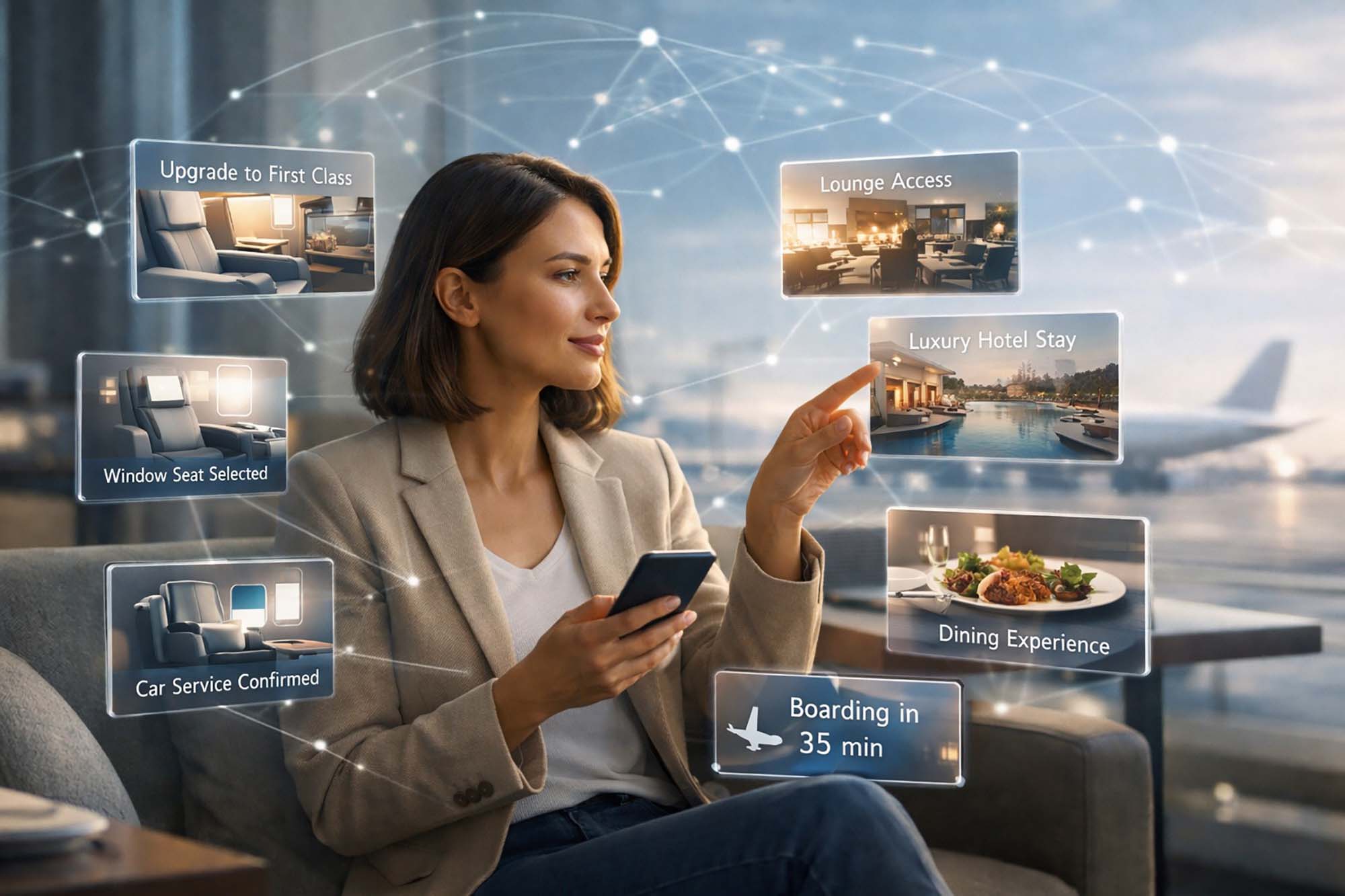
All of which leaves the largely transactional loyalty models of yesteryear lacking. What’s needed, and what 2026 will beckon, is a loyalty re-design, transformed and modernized for today’s consumer. Next-generation loyalty programs will harness data, digital tools and unified decision-making to dynamically fill flights through hyperpersonalized offers, leveraging real-time inventory and behavioral insights. Campaigns can move from generic promotions to precision marketing, where every interaction — search, booking, disruption recovery — is informed by loyalty data and contextual intelligence.
Other opportunities abound. Subscriptions for seats, bags or priority services could smooth revenue seasonality and increase predictability, with Ryanair’s ‘Prime’ membership subscription one case in point, providing access to reserved seating, complimentary travel insurance and monthly seat sales.11
Lifestyle partnerships and retail marketplaces, meanwhile, can engage customers even when they are not flying. Singapore Airlines’ KrisFlyer program12 is a prime example, with lifestyle-led rewards across travel, dining, shopping and other unique experiences, while VistaJet has launched an in-flight sleep program to combat jet lag for its members.13
Whatever the result, it’s all about using data to anticipate needs, personalize journeys and create emotional connections that endure beyond the flight. Doing so will see airlines successfully re-imagine loyalty for a new era, meeting the fast-evolving expectations of 2026’s customers.
Partnering to Unlock Future-facing Transformation
Promisingly, future-facing airlines are already investing in the tools they need to build this new era. Research shows that more than 70 percent of carriers, for instance, are deploying advanced pricing and personalization tools, signaling a clear commitment to transformation.14
However, ambition alone does not guarantee success. The shift from legacy systems and siloed processes to integrated, intelligent ecosystems is complex, resource-intensive and fraught with risk. It’s why many airlines are turning to strategic partnerships to help, offering instant access to the tools and expertise required to thrive at speed.
The challenge is not just technology, but orchestration.
Retailing must align with operations; loyalty must integrate with merchandising; AI must be embedded across workflows without compromising governance or compliance. Achieving this requires deep domain expertise, proven frameworks and the ability to bridge old and new architectures while maintaining business continuity — all of which the right partnership can provide.
Enterprises that embrace such a vision and execute successfully can re-define the next phase of airline industry transformation, building systems that learn and improve with every interaction, and deliver transformative experiences end-to-end.
Explore how these trends translate into capabilities for airlines.
References
-
October Air Passenger Demand Growth Accelerates to 6.6% | IATA
-
Airline Profitability Stabilizes with 3.9% Net Margin Expected in 2026 | IATA
-
Supply Chain Challenges Could Cost Airlines More Than $11 Billion in 2025 | IATA
-
The Eight Myths of Airline Retailing | McKinsey & Company
-
Air Travel Demand Outlook 2025: Steady Growth Despite Supply Constraints | Boston Consulting Group
-
Agentic AI: CVG, Lufthansa, ADR, FRA and DataArt Discuss the Transformative Potential of Advanced Autonomy and the Move Towards Artificial Intelligence | Future Travel Experience
-
Gartner Predicts Agentic AI Will Autonomously Resolve 80% of Common Customer Service Issues Without Human Intervention by 2029 | Gartner
-
Airline Industry Profits Hold Steady in Q2 2025 Results | Oliver Wyman
-
United Calls Its Surge in Basic Economy Sales a ‘Home Run’ | Travel Weekly
-
Loyalty Programs Are Growing—So Are Customer Expectations
-
Ryanair’s New ‘Prime’ Membership Flight Service Explained | NI Travel News
-
Singapore Airlines Launches KrisFlyer Promotion | Business Traveller
-
VistaJet Launches the Sleep Program | VistaJet
-
Digital Innovation Can Take Airlines to New Heights | Boston Consulting Group
FAQs
1. How can airlines use intelligent retailing to increase revenue and improve customer experience?
Airlines are moving beyond traditional ticket sales toward dynamic retailing models that deliver personalized offers, ancillary services and real-time pricing. Intelligent retail ecosystems enable carriers to increase revenue per passenger while creating more relevant customer experiences. WNS helps airlines leverage data, analytics and AI-driven retail strategies to optimize merchandising, improve conversion rates and maximize customer lifetime value.
2. Why is Agentic AI becoming a strategic priority for airline operations?
Agentic AI enables airlines to automate complex operational decisions, predict disruptions and orchestrate responses across multiple business functions. From crew management and network planning to customer service and revenue optimization, AI-powered operations improve agility and resilience. WNS helps airlines deploy intelligent operations frameworks that transform operational complexity into a competitive advantage.
3. How can airlines modernize loyalty programs to drive long-term customer value?
Traditional loyalty programs focused primarily on points accumulation and redemption. Next-generation loyalty models leverage customer data, behavioral insights and personalized rewards to create stronger traveler engagement. WNS helps airlines design loyalty ecosystems that increase customer retention, enhance personalization and unlock new revenue opportunities through intelligent customer engagement strategies.
4. What operational challenges will have the greatest impact on airline competitiveness in 2026?
Airlines continue to face aircraft delivery delays, supply chain constraints, labor shortages, capacity limitations and increasing customer expectations. Organizations that adopt real-time decision-making, intelligent automation and data-driven operating models will be better positioned to navigate these challenges. WNS helps airlines build resilient operations that improve efficiency, service reliability and business performance.
5. Why should airlines partner with WNS to prepare for the future of aviation?
WNS combines deep aviation expertise with advanced analytics, Agentic AI, intelligent operations and customer experience transformation capabilities. From airline retailing and revenue management to loyalty transformation and operational optimization, WNS helps airlines build future-ready business models that improve profitability, customer engagement and operational resilience. This enables carriers to stay ahead of emerging industry trends and create sustainable competitive advantage.